Hey there, fellow business owner! Picture this: you’ve poured blood, sweat, and tears into building your small business. It’s your passion, your dream. But have you ever thought about what could happen if an unexpected event derails your hard work? That’s where the magic of commercial insurance comes in. Understanding and choosing the right insurance is not just a safety net—it’s the cornerstone of your business’s longevity.
Getting a grip on the right commercial insurance types for your small business is like putting on a suit of armor. It shields you from financial hits and helps ensure your business keeps thriving, even in stormy weather. So buckle up, because we’re diving into the world of insurance with the strategy and flair only Backlinko could muster!
Understanding the Importance of Commercial Insurance for Small Businesses
Did you know that 40% of small businesses never reopen after a disaster? Shocking, right? That’s why commercial insurance is a lifeline.
Commercial insurance provides a safety net that can keep your business afloat. It’s not just about compliance; it’s about survival. You need this protection against the unpredictable events that could otherwise lead to financial ruin.
Why Your Business Needs Commercial Insurance
Every small business faces unique risks, from natural disasters to legal liabilities. Imagine a fire destroys your shop or a customer sues for an injury on your premises. Without insurance, you’d cover these costs out of pocket.
But here’s the deal: commercial insurance covers property damage, liability claims, and even employee-related risks. So, it acts as a shield against unforeseen incidents that can disrupt operations or halt them entirely.
Risks Mitigated by Commercial Insurance
Commercial insurance is like the Swiss Army knife of business protection. It tackles property damage, business interruption, and liability claims with tailored coverage options.
For example, a strong storm could damage your inventory or equipment, rendering you unable to fulfill orders. However, with the right policy, your insurance can cover repair or replacement costs, helping you to bounce back quickly.
Pro Tip: Never underestimate the power of a solid insurance policy. It can mean the difference between a temporary setback and permanent closure.
Impact on Business Continuity
Insurance is the backbone of your business continuity plan. If disaster strikes, you’re not left scrambling for resources. Instead, you can rely on coverage to maintain operations and cash flow.
Imagine you’re hit with a cyberatt attack or faced with a supply chain issue. A comprehensive policy provides the financial buffer needed to address these challenges without draining your reserves.
Financial Consequences of Operating Without Insurance
Running a business without insurance is like walking a tightrope without a safety net. The potential financial fallout is enormous. Legal fees, damages, and lost revenue add up quickly.
If you think, “It won’t happen to me,” think again. Data shows that businesses are more vulnerable than ever to unexpected disruptions. And when they hit, the costs can be crippling.
Types of Insurance Coverage Essential for Small Businesses
Did you know that 40% of small businesses never reopen after a disaster? That’s why it’s crucial to have the right insurance coverage.
Let’s break down the essential types of commercial insurance you need to safeguard your business.
General Liability Insurance
General Liability Insurance is like the Swiss Army knife of business coverage. It protects you from claims related to bodily injuries, property damage, and advertising injuries. This coverage is essential because it covers legal fees and compensation claims, which can easily cripple a small business financially.
Property Insurance
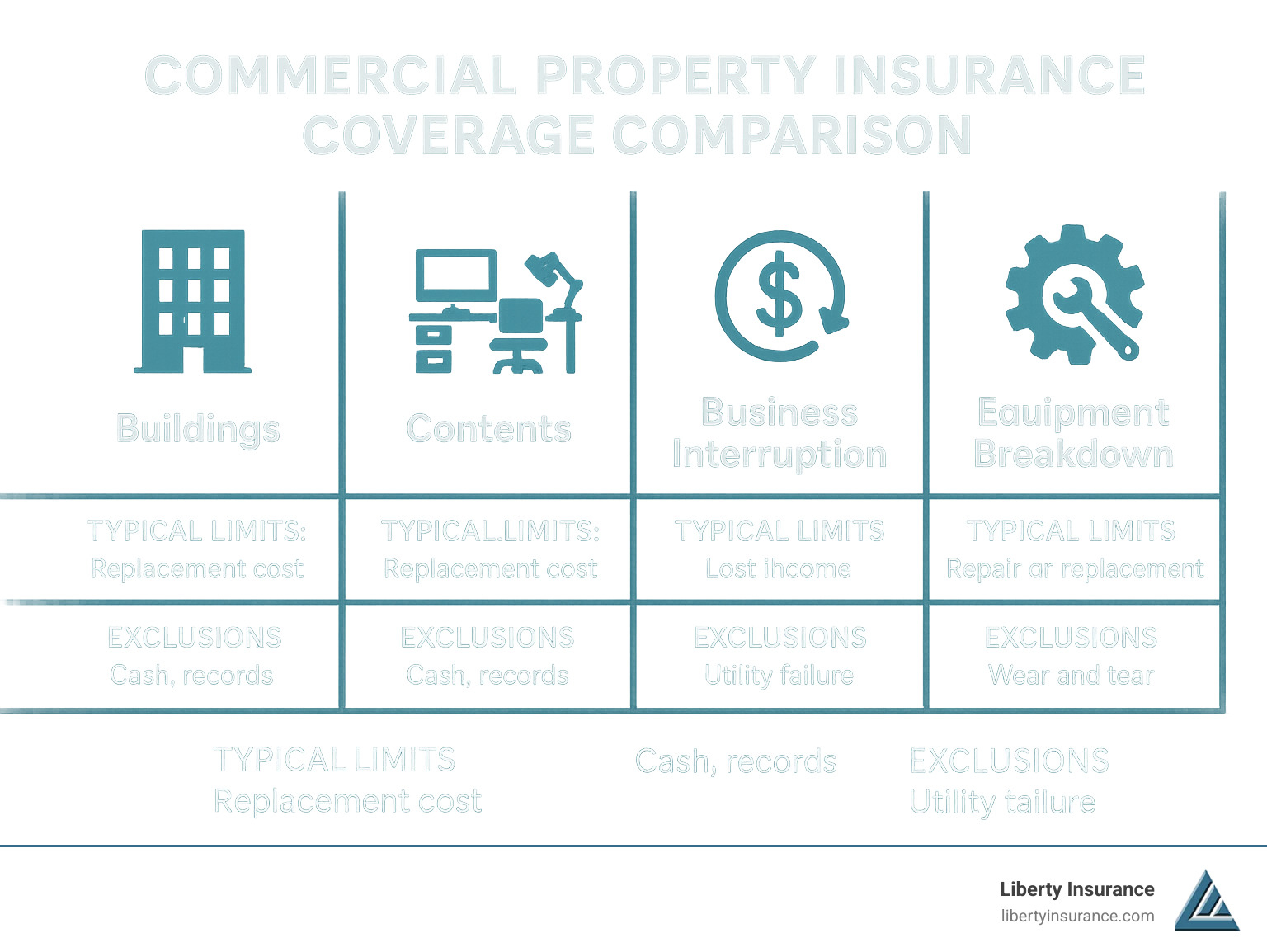
Imagine a fire destroys your office overnight. What would you do? Property Insurance helps cover the cost of repairing or replacing your business’s physical assets. This includes your building, equipment, inventory, and more. But here’s the deal: it doesn’t cover floods or earthquakes. You’ll need additional policies for those disasters.
Business Interruption Insurance
When a covered disaster strikes, Business Interruption Insurance kicks in, covering lost income and operating expenses. This can be a lifesaver when you can’t open your doors for business. However, it’s important to note that this coverage is only activated by certain events, like fires or storms, and not due to market conditions or economic downturns.
Pro Tip: Always read the fine print to understand what specific events are covered by your policy.
Comparing Insurance Options
To make things easier, here’s a quick comparison of common insurance types:
| Insurance Type | Coverage Provides | Benefits | Limitations |
|---|---|---|---|
| General Liability | Bodily injury, property damage, advertising injury | Covers legal fees | Doesn’t cover employee injuries |
| Property Insurance | Physical assets (building, equipment) | Replaces damaged assets | No coverage for floods or earthquakes |
| Business Interruption | Lost income, ongoing expenses | Helps maintain cash flow | Only covers specific events |
By now, you should have a clear picture of the essential insurance types for your small business. Remember, choosing the right coverage can make or break your business in times of crisis.
Selecting the Right Insurance Policy for Your Business

Did you know that 40% of small businesses never reopen after a disaster? It’s crucial to have the right insurance policy in place. Let’s dive into how you can choose wisely and protect your livelihood.
Choosing the right insurance policy starts with understanding your business’s unique needs. Not all businesses face the same risks, and your policy should reflect that.
Factors to Consider
First, consider the nature of your business. Do you operate from a physical location or is your model primarily online? Each scenario comes with its own set of risks. Next, think about your budget versus potential risks. It’s tempting to cut costs, BUT skimping on insurance could cost you big-time later.
Here is the deal: Align your insurance policy with the specific threats your business might face. Conduct a risk assessment to identify these. Ask yourself, “What are the worst-case scenarios?” Then, look for policies that provide adequate coverage for these risks.
Evaluating Insurance Providers
Not all insurance providers are created equal. Here’s how you can assess them effectively.
- Check their reputation through reviews and ratings.
- Understand their claims process—how easy is it to file and settle a claim?
- Evaluate their customer service. Are they responsive and helpful?
A great provider should not only offer a wide range of policies but also be willing to customize them. Remember, you’re looking for solutions that match your business needs, not a one-size-fits-all policy.
Pro Tip: “Work with providers who understand your industry to tailor policies that fit like a glove,” says insurance expert Jane Doe.
Cost Factors and Budgeting for Commercial Insurance
Did you know that over 40% of small businesses fail to reopen after a disaster? That’s why having the right commercial insurance isn’t just a luxury; it’s a necessity. However, understanding how to budget for it can feel overwhelming. Let’s break it down.
Insurance premiums are influenced by several factors. These include the size of your business, industry type, location, and claims history. For example, a construction company in a hurricane-prone area will likely pay more than a retail store in a quiet suburb. BUT, here’s the deal: knowing these elements can help you anticipate costs and budget effectively.
Elements Influencing Insurance Costs
The cost of your commercial insurance is based on multiple variables. The size of your business (number of employees), the industry you operate in, and even your location can significantly affect your premiums. If your business has a history of claims, expect to pay more. Insurers assess risk, so a company with numerous claims is seen as more of a liability.
Effective Budgeting for Insurance Coverage
How can you budget for something that seems so unpredictable? Start by reviewing your insurance needs annually. Look at what coverage you have and what you need. Here’s a pro tip:
Bundle your insurance policies
to get the best rates. Many providers offer discounts if you combine multiple types of coverage.
Strategies to Minimize Costs
Want to save money on your premiums? Consider raising your deductible. A higher deductible lowers your premium costs but remember: you’ll pay more out-of-pocket if you file a claim. Also, implement risk management strategies. This can demonstrate to insurers that you’re a lower risk, which can help reduce costs.
Ready to see some numbers? Check out this cost comparison table for different types of insurance and coverage levels.
| Insurance Type | Basic Coverage Premium | Comprehensive Coverage Premium |
|---|---|---|
| General Liability | $500/year | $1,200/year |
| Property Insurance | $750/year | $1,500/year |
| Workers’ Compensation | $1,000/year | $2,500/year |
Legal and Compliance Aspects of Commercial Insurance
Did you know that one in five small businesses face legal action every year? If you think your business might be immune, think again. Commercial insurance isn’t just a safety net—it’s a legal necessity.
Understanding the legal and compliance requirements is crucial for every small business owner. Without adequate coverage, you risk facing hefty fines, legal battles, and even the closure of your business. Let’s break down the essentials to ensure you’re legally covered.
Regulations and Compliance Requirements
In most states, small businesses are required to carry certain types of insurance, such as workers’ compensation and general liability insurance. Compliance isn’t optional—it’s mandated by law. Failure to comply can result in fines and penalties that are far costlier than the premiums themselves.
You need to understand not just state regulations, but also federal laws that might affect your industry. For instance, businesses working with government contracts often need to meet specific insurance requirements. Ignoring these can void contracts and lead to legal repercussions.
Legal Implications of Inadequate Coverage
The wrong insurance policy can be just as harmful as having none at all. If your coverage doesn’t meet legal requirements, you’re exposed to lawsuits that can drain your finances and tarnish your reputation. Imagine the impact on your business if an unexpected event led to a lawsuit that your insurance couldn’t cover.
The Role of Insurance in Contractual Obligations
Many business contracts require you to have specific insurance policies. For example, lease agreements often stipulate that you must have property insurance. Failing to comply with these terms can lead to contract termination or costly legal disputes. Always review your contracts with an insurance expert to ensure compliance.
“Failing to adequately insure your business isn’t just a financial risk—it’s a legal liability. Ensure compliance to protect your business integrity.” – Legal Expert, Jane Doe
Expert Advice on Insurance Compliance
Experts agree that staying compliant with insurance regulations is a proactive step towards safeguarding your business. Regularly updating your policies and understanding the evolving legal landscape is key. Don’t wait until it’s too late to review your insurance strategy.
Pro Tip: Schedule an annual review of your insurance policies with a legal advisor to ensure you’re always compliant and adequately covered.
Benefits of Bundling Insurance Policies for Small Businesses
Think you’re overpaying for business insurance? You might be right. Bundling can save you up to 30% on premiums. It’s not just about money. It’s about time and efficiency too.
When you bundle your insurance policies, you gain the power of consolidation. That means fewer bills, less paperwork, and a single point of contact for all your insurance needs. But what’s in it for your wallet?
Advantages of Bundling Insurance Policies
Bundling your insurance policies can lead to significant cost savings. Insurance companies often provide discounts for combining multiple policies into one package. This not only reduces your premiums but also simplifies management. Here’s the deal: fewer policies mean fewer headaches.
When you partner with a single insurer, you gain leverage. You can negotiate better terms, and if you ever need to file a claim, you’re not dealing with multiple companies playing the blame game. It’s a win-win.
Customizing Bundled Insurance Packages
Not all businesses are the same. So, why should your insurance be? Customizing your bundled insurance package ensures you’re not paying for what you don’t need. You can tailor your coverage to fit your unique business risks. This makes your insurance cost-efficient and relevant.
Start by assessing your main exposures. Do you need liability, property, or workers’ comp? Once you know what you need, work with your insurer to create a bundle that matches your risk profile without breaking the bank.
Pro Tip: Ask your insurer if they offer a “multi-policy discount” for bundling. You might be surprised at the savings!
Bundled Insurance Options Table
The right bundle can cover all your bases. Here’s a quick look at some common bundled options and their advantages:
| Bundle Option | Coverage Benefits |
|---|---|
| Business Owner’s Policy (BOP) | Includes general liability, property insurance, and often business interruption insurance. Great for small to medium enterprises. |
| Commercial Package Policy (CPP) | Flexible protection for varied risks including property, liability, and crime. Ideal for mid-sized businesses with specific needs. |
| Professional Liability and Cyber Liability | Combines protection against lawsuits and cyber threats. Essential for tech or service-focused industries. |
Cost Savings and Streamlined Management
Imagine cutting your insurance costs while making management a breeze. That’s the power of bundling policies. Streamlined administration means you spend less time on insurance tasks and more on growing your business.
When everything’s under one roof, communication is seamless. Your time is valuable. With fewer bills and a single point of contact, you reduce the hassle and confusion. This clarity and simplicity can be a game-changer.
Summary
So there you have it—your roadmap to navigating the complex world of small business insurance. By understanding the essentials, you’re not only safeguarding your business but also paving the way for future growth and stability. Remember, insurance isn’t just an expense—it’s an investment in your peace of mind. Now, go forth and conquer the business world with the confidence that you’re protected!
FAQ
Why is commercial insurance important for small businesses?
Commercial insurance is crucial as it protects against financial losses caused by unforeseen events like accidents, lawsuits, or natural disasters, ensuring business continuity.
What are the primary types of commercial insurance small businesses need?
Key types include general liability, property insurance, and business interruption insurance, each covering different aspects of risk management.
How can a small business choose the right insurance policy?
Consider factors like business type, location, and potential risks. It’s also essential to evaluate and compare different insurance providers and their offerings.
What factors affect the cost of commercial insurance premiums?
Costs can be influenced by factors such as business size, industry, location, and chosen coverage levels.
Is bundling insurance policies beneficial for small businesses?
Yes, bundling can offer cost savings and streamlined management, allowing businesses to customize their coverage efficiently.
